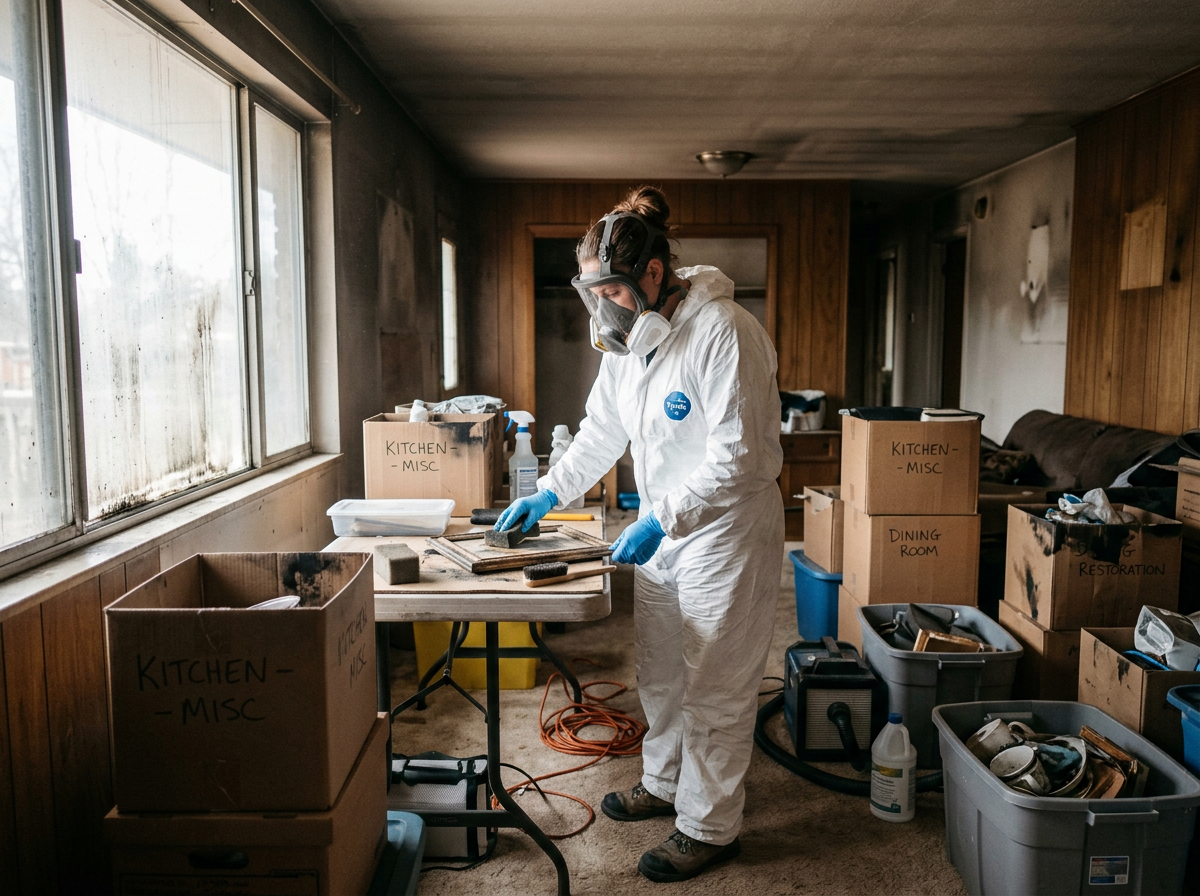
Cascade sits in a narrow canyon along Ute Pass where dense ponderosa pine and steep slopes create fast-moving wildfire conditions that differ from the plains east of Colorado Springs. Restoration crews must navigate winding sections of Highway 24 and narrow driveways to reach older cabins and homes built before modern defensible-space standards. Smoke from structure fires travels quickly through the canyon, requiring specialized odor removal and air scrubbing that accounts for limited ventilation.
Water supply often comes from individual wells rather than municipal hydrants, so technicians stage portable water sources and adjust extraction equipment accordingly. Ash and soot settle on steep roofs and into crawl spaces that are hard to reach with standard trucks, extending the inspection phase. Crews familiar with the area plan for longer response windows from Colorado Springs when snow or ice coats the pass.
Local homeowners frequently deal with both wildfire ember intrusion and chimney or kitchen fires inside aging wood-frame houses. Restoration work includes clearing charred debris from drainage ditches that feed Cascade Creek and protecting remaining vegetation that stabilizes the canyon walls. Every project starts with an on-site assessment of lot slope and access before equipment is brought in.
The team serving Cascade and nearby Cripple Creek also handles smoke damage restoration.
The same team that covers Cascade provides fire damage restoration in Fountain.
Around Cascade
We regularly work near:
- 📍Ute Pass
- 📍Cascade Creek
- 📍Highway 24 through Cascade
- 📍Cascade Volunteer Fire Department
- 📍Pikes Peak Highway entrance area
Fire Damage Restoration in Cascade — Local Notes
- •Older mountain cabins on narrow lots with limited turnaround space for equipment trailers.
- •Ponderosa pine duff and needle accumulation under decks increases hidden smoke penetration.
- •Steep driveways and seasonal ice require four-wheel-drive extraction units and winch points.
- •Well-water homes need on-site water storage for cleaning instead of hydrant hookups.