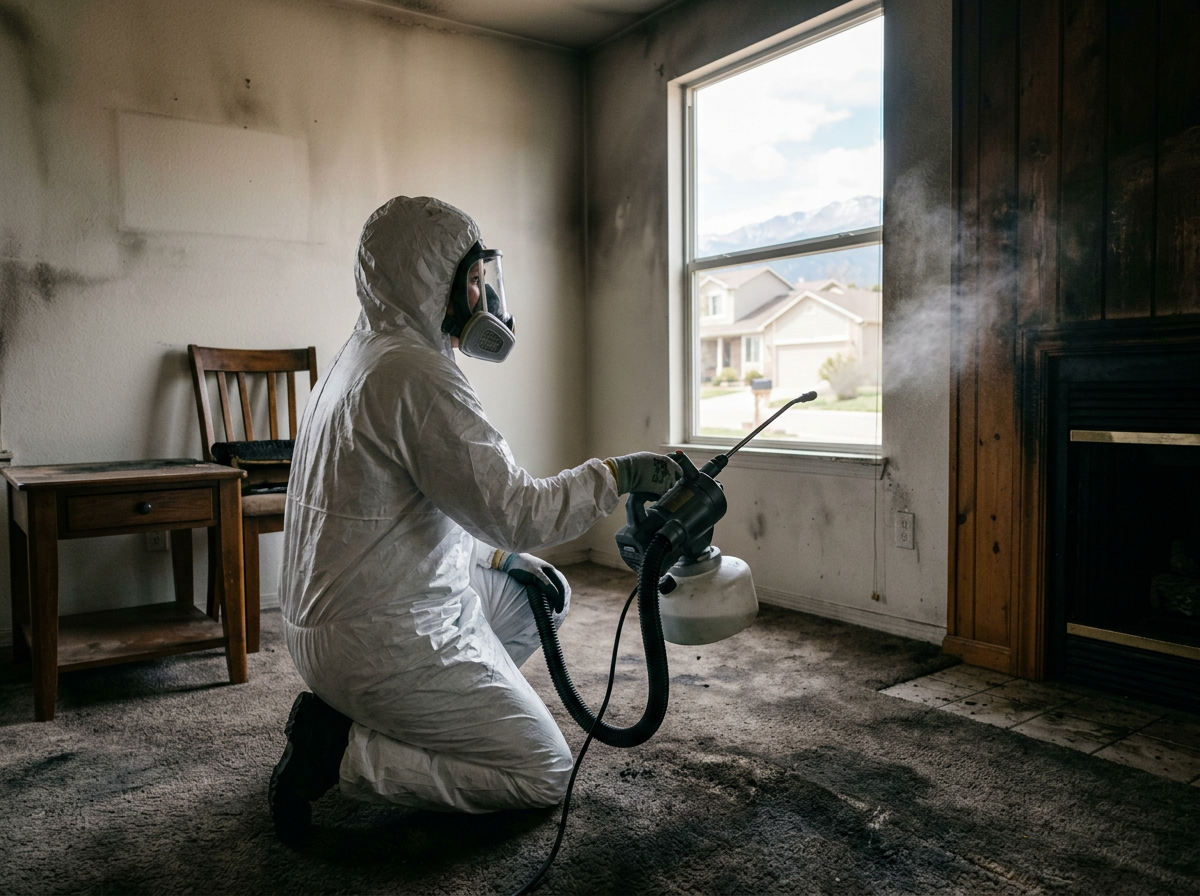
Smoke from structure fires and wildfires leaves behind alkaline soot and acidic residues that bond differently to surfaces depending on combustion temperature. At 6,035 feet, lower oxygen levels change how materials burn, producing finer particulates that penetrate deeper into drywall, insulation, and upholstery. Dry Colorado air keeps these particles suspended longer, allowing them to travel through HVAC systems and settle in attics and wall cavities. Suppression water from firefighters must be removed first because moisture reactivates odors and creates secondary mold risks in porous materials.
Sequencing begins with source removal of charred debris, followed by HEPA vacuuming and application of pH-specific cleaners matched to residue type. Alkaline soot responds to acidic solutions while acidic smoke requires alkaline neutralizers; mismatched products can set the odor permanently. In pre-war Old North End homes, original plaster and lath often cannot be saved once smoke has migrated behind the walls, requiring selective demolition. Newer Briargate builds with tight insulation can trap odors in spray foam that resists standard extraction.
Air quality monitoring is required throughout because fine particulates from Waldo Canyon and Black Forest Fire events continue off-gassing for weeks in low-humidity conditions. Occupants should avoid re-entry until third-party testing confirms safe levels, especially in homes with chinook wind exposure that pushes smoke through window seals and vents. Materials like carpet padding, acoustic ceiling tiles, and unsealed wood often retain odors permanently and must be discarded rather than cleaned.
Final verification uses both olfactory inspection and air sampling because visual clearance alone misses residues embedded at altitude-driven combustion chemistry. Homeowners frequently attempt DIY ozone or fogging without addressing the source, which only masks odors temporarily and can damage electronics and fabrics in dry conditions.
Technician insight
In Colorado Springs the thing that catches most people out with Odor Removal is how the combination of 6,000-foot altitude and single-digit humidity drives smoke so deep into carpet padding and blown-in insulation that standard fogging never reaches it, especially in 1970s Security-Widefield homes where original ductwork leaks.
Wolf Ranch Wildfire Smoke Infiltration
Smoke from a nearby grass fire entered a Wolf Ranch home through attic vents during a chinook wind event. We found heavy particulate loading in the HVAC and behind exterior walls. After water extraction from minor suppression runoff, we performed targeted cleaning and insulation removal in the affected cavities. The home passed air testing and the family returned without recurring odor.
Odor Removal Services We Offer
✓Wildfire Smoke Odor Extraction
Removes fine particulates that enter through HVAC intakes and attic vents during regional fires without burning the structure itself.
✓Post-Structure Fire Soot Neutralization
Neutralizes alkaline and acidic residues left after suppression water is extracted from burned homes in Security-Widefield and Briargate.
✓HVAC System Smoke Deodorization
Cleans ducts and coils where smoke travels and redeposits during chinook wind events common to the Front Range.
✓Attic and Insulation Odor Removal
Targets smoke trapped in loose-fill and blown-in insulation common in large-lot Black Forest and Calhan properties.
✓Porous Material Odor Treatment
Treats upholstery, carpet, and unfinished wood that absorb residues faster in the dry high-altitude climate.
Odor Removal Cost in Colorado Springs, CO
| Service | Typical Range | What Affects It |
|---|---|---|
| Initial Odor Assessment | $250–$450 | Varies with home size and number of affected levels |
| Single Room Smoke Odor Removal | $800–$1,800 | Higher when drywall or insulation must be opened |
| Whole-Home Wildfire Infiltration Cleanup | $2,200–$6,500 | Driven by HVAC cleaning needs and material replacement |
| HVAC Duct and Coil Deodorization | $600–$1,400 | Depends on system age and access in tract versus custom homes |
Ranges are typical for Colorado Springs, CO and confirmed with an exact written quote before any work starts.
How it works
- 1
Source Identification
Inspect for active smoke sources and map infiltration paths created by local wind patterns and HVAC layouts.
- 2
Water Extraction
Remove all suppression water before odor work begins to prevent reactivation of residues.
- 3
Residue-Specific Cleaning
Apply matched acidic or alkaline agents to surfaces based on combustion type and altitude effects.
- 4
Neutralization and Ventilation
Fog or seal treated areas and run air scrubbers to capture remaining airborne particulates.
- 5
Verification Testing
Confirm odor elimination through sensory and air-quality checks before reoccupancy.
Pricing
Costs depend on square footage affected, depth of smoke penetration, and whether HVAC or insulation requires specialized access.