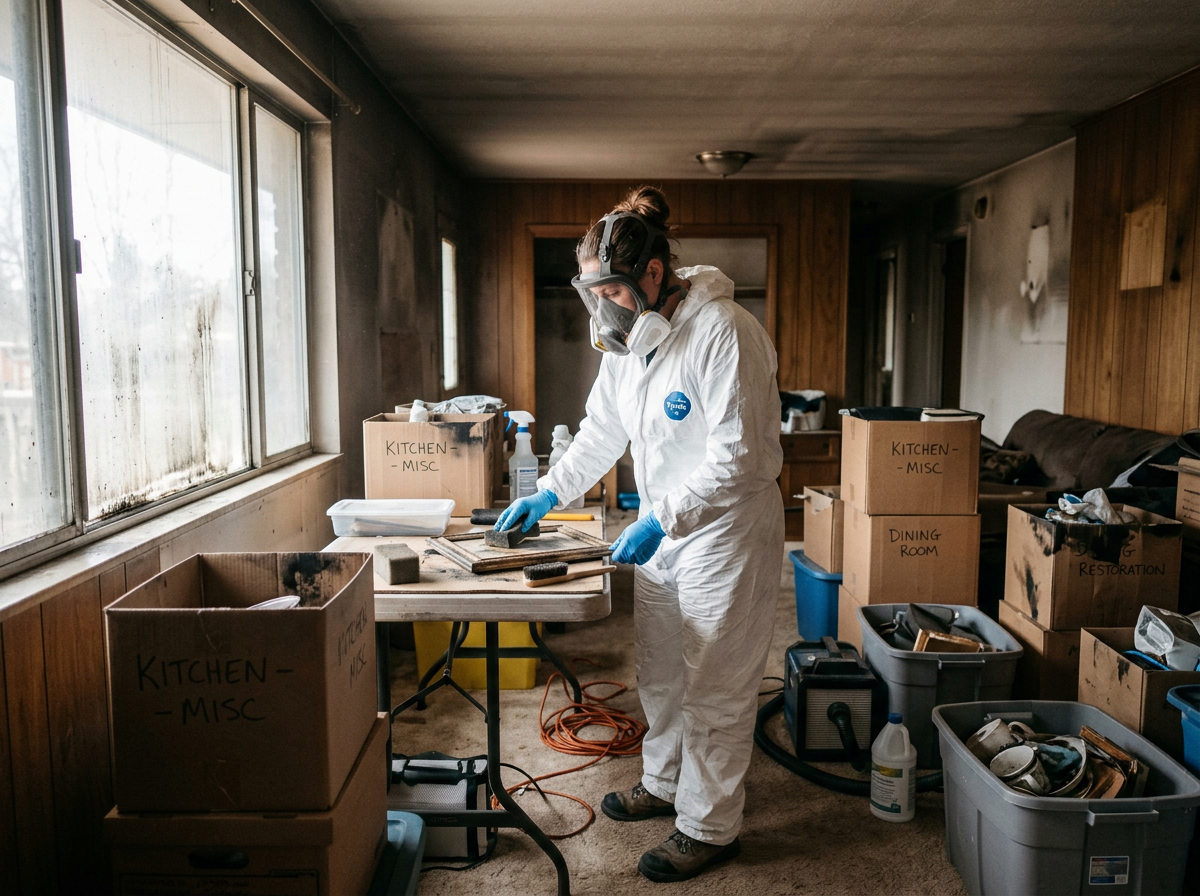
Fire and smoke leave distinct residues that demand targeted chemistry. Protein-based soot from kitchen fires requires enzyme cleaners to break down organic films, while synthetic smoke from plastics and furnishings produces oily deposits that respond to solvent-based agents. In Colorado Springs the 6,035-foot altitude changes combustion, often creating finer, more alkaline particles that embed deeper into fabrics and wood. Dry air keeps these particulates suspended longer, so technicians seal HVAC intakes and work in negative pressure before any cleaning begins.
Suppression water arrives with every structure fire and must be removed first; moisture sets soot permanently into porous surfaces. Items are inventoried, then sorted by material and contamination level. Textiles and upholstery move through HEPA vacuuming, controlled wet cleaning, and ozone or hydroxyl treatment for odor. Electronics receive ultrasonic or specialized dry cleaning only after corrosion checks, because high-altitude soot is more conductive and can damage circuits days after the fire.
Certain materials cannot be saved. Heavily smoke-saturated foam, paper, and unfinished wood absorb fine particulates so thoroughly that odor returns even after treatment. Homeowners are shown why these items are documented for insurance rather than cleaned. Air-quality monitoring continues throughout the job because residual smoke can re-aerosolize during handling, especially when chinook winds create pressure differentials that pull particles through window seals and attic vents in Security-Widefield and Briargate homes.
Final steps focus on verification. Each cleaned item is inspected under task lighting for visible residue and tested for lingering odor before repacking. Contents are stored in climate-controlled conditions until the structure is cleared, preventing recontamination from ongoing remediation work.
Technician insight
In Colorado Springs the dry air and frequent chinook winds push fine smoke deeper into contents than most homeowners expect, especially in 1970s tract homes where attic vents and unsealed outlets let particulates travel room to room. We always pull water first or the soot locks in permanently.
Smoke infiltration in a Briargate home
A structure fire two doors down sent smoke through HVAC intakes into a 2015 Briargate residence. Soot had settled on clothing, area rugs, and electronics while suppression water sat in the basement. We extracted moisture, cleaned textiles with enzyme agents matched to the smoke type, restored electronics, and returned items after odor treatment with no recontamination.
Contents Cleaning and Restoration Services We Offer
✓Smoke Odor Removal From Textiles
Targeted cleaning and deodorization of clothing, linens, and upholstery using agents matched to smoke type to eliminate embedded odors without fabric damage.
✓Soot Removal From Hard Surfaces
Gentle yet thorough cleaning of wood furniture, cabinetry, and décor using pH-balanced solutions that lift alkaline soot common at Colorado Springs elevation.
✓Electronics and Appliance Restoration
Inspection, dry cleaning, and corrosion control for smoke-affected electronics and small appliances before any power is restored.
✓Document and Photograph Recovery
Careful stabilization and cleaning of paper goods and photos using freeze-drying and specialized techniques to prevent further smoke or water damage.
✓Area Rug and Carpet Cleaning
Deep extraction and odor treatment for area rugs exposed to smoke and suppression water, with pre-testing for dye stability.
✓Contents Inventory and Pack-Out
Systematic cataloging, labeling, and secure transport of salvageable items to prevent loss or cross-contamination during structure repairs.
Contents Cleaning and Restoration Cost in Colorado Springs, CO
| Service | Typical Range | What Affects It |
|---|---|---|
| Small Item Cleaning | $75–$250 | Varies by material and soot level; electronics often higher |
| Clothing or Textile Batch | $300–$900 | Depends on quantity and whether water is present |
| Area Rug Cleaning | $200–$650 | Size and backing type affect pricing |
| Electronics Restoration | $150–$500 | Per device; corrosion risk raises cost |
| Document Recovery | $100–$400 | Based on volume and condition |
Ranges are typical for Colorado Springs, CO and confirmed with an exact written quote before any work starts.
How it works
- 1
Initial Assessment
Technicians evaluate every item for residue type, water exposure, and material compatibility while documenting condition for insurance.
- 2
Water Extraction
Standing water and moisture are removed first to stop soot from setting permanently into porous surfaces.
- 3
Residue-Specific Cleaning
Items receive cleaning agents matched to the smoke chemistry present, followed by HEPA vacuuming and controlled rinsing.
- 4
Odor Neutralization
Ozone, hydroxyl, or thermal fogging treatments address embedded odors after visible soot is gone.
- 5
Final Inspection and Return
Each item is checked under bright light and by odor test before repacking for return to the restored structure.
Pricing
Costs depend on item count, material types, and degree of smoke and water exposure; we provide detailed assessments before work begins.