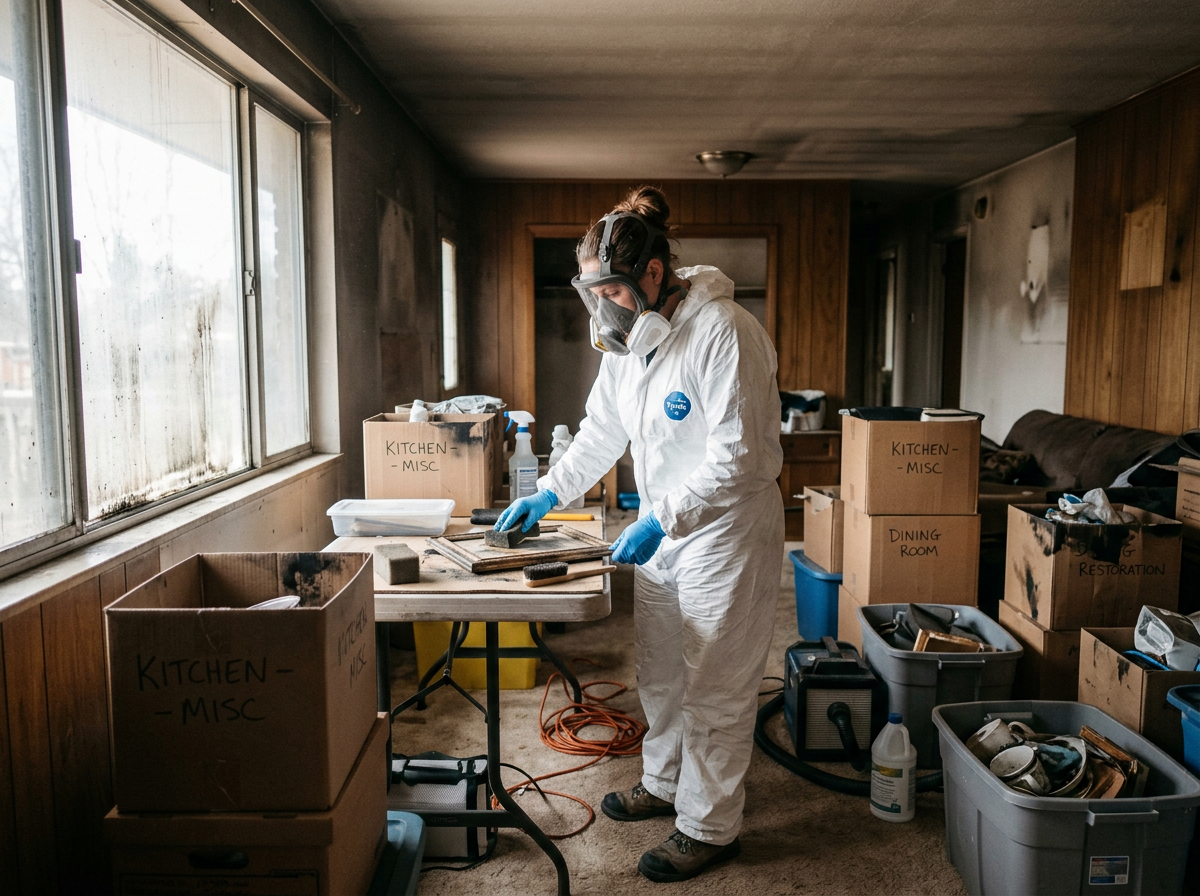
Cimarron Hills sits on the eastern edge of Colorado Springs with a mix of 1970s ranch homes and 1980s two-stories on modest lots. Structure fires often start in kitchens or garages and send smoke through shared attics and HVAC systems that run across neighboring properties. Crews must work around cul-de-sac layouts and narrow side yards while checking for hidden char in popcorn ceilings and original paneling.
Wildfire smoke from the eastern plains drifts in during dry seasons and settles in lower pockets near Sand Creek. Restoration teams focus on odor removal in older carpet and insulation because many homes here still use the original forced-air ducts. Quick arrival from Colorado Springs matters because evening traffic on Powers Boulevard can add twenty minutes to response times.
Water supply comes from city lines rather than wells, which simplifies initial suppression follow-up but requires careful drying around slab foundations common in the area. Local crews know which streets have rear-alley access for equipment and which blocks back up against open fields that carry wind-driven embers.
Homes in Cimarron Hills and Peyton get smoke damage restoration from the same crews.
Around Cimarron Hills
We regularly work near:
- 📍Cimarron Hills Park
- 📍Powers Boulevard
- 📍Galley Road
- 📍Sand Creek
- 📍Cimarron Elementary School
Fire Damage Restoration in Cimarron Hills — Local Notes
- •1970s-1980s homes with popcorn ceilings and original ductwork trap smoke in ways newer builds do not.
- •Powers Boulevard rush-hour traffic often delays arrival from central Colorado Springs by 15-25 minutes.
- •Cul-de-sac layouts and narrow side yards limit equipment staging on many streets.
- •Proximity to open eastern fields increases wind-driven ember exposure during dry spells.