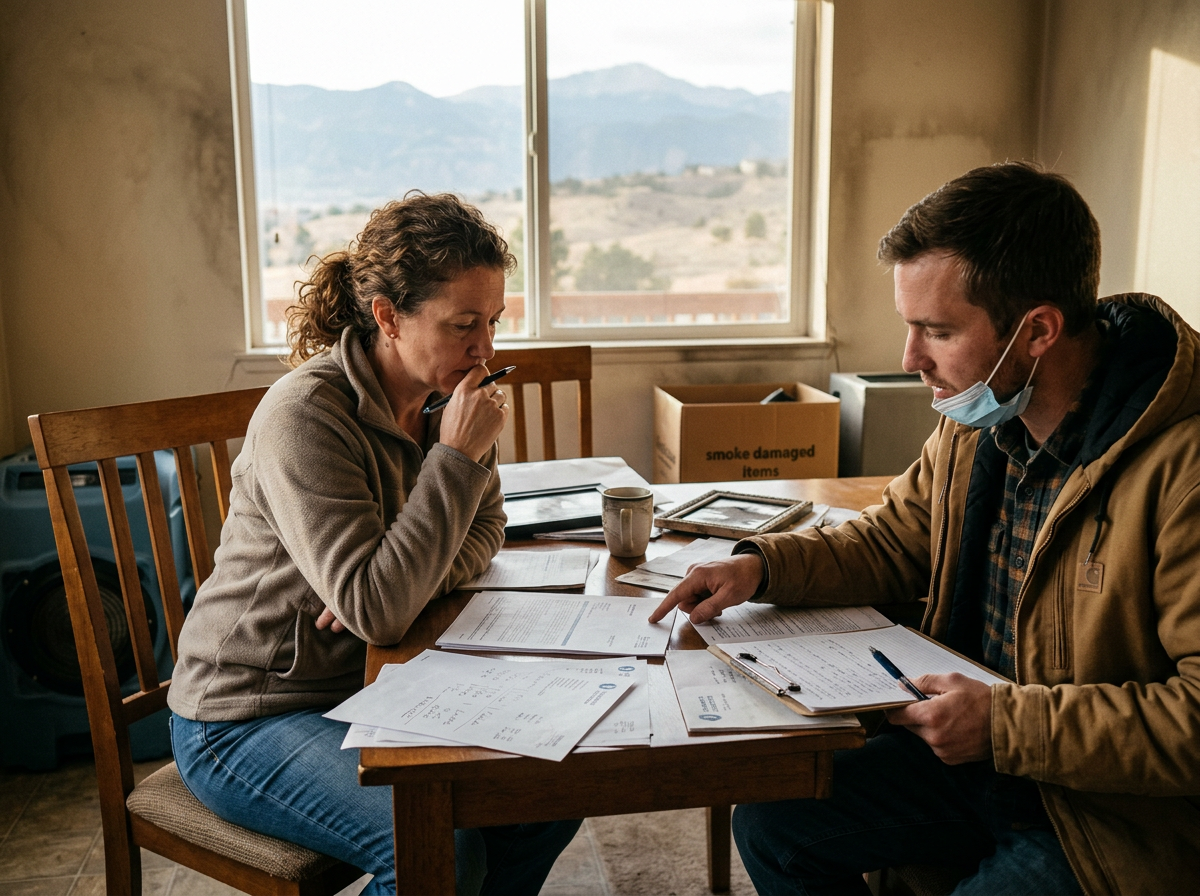
Deer Trail sits on the eastern plains where grass fires move fast across open lots and older rural homes. Crews coming from Colorado Springs face a long haul east on I-70, so early detection and quick on-site assessment matter more than in closer suburbs. Propane tanks and private wells add extra steps during smoke and soot cleanup because water supply is limited and fuel lines can complicate ventilation work.
Housing stock here mixes mid-century ranch homes on large parcels with scattered newer builds. Tight access roads and gravel driveways slow equipment arrival compared with paved city streets. Restoration teams must plan for wind-driven smoke that travels across fields and settles in outbuildings, requiring thorough inspection of barns, sheds and detached garages that many urban jobs never encounter.
Winter winds and summer thunderstorms change drying times and equipment needs on these open properties. Work often starts with protecting well heads and septic systems before interior cleaning begins, and crews stage extra containment because embers can linger in dry grass long after the initial call.
Around Deer Trail
We regularly work near:
- 📍Deer Trail School
- 📍US Highway 40
- 📍Deer Trail Post Office
- 📍I-70 Deer Trail exit
Fire Damage Restoration in Deer Trail — Local Notes
- •Long response window from Colorado Springs base means on-site crews often begin stabilization before full team arrival.
- •Propane and well-water homes require separate fuel shutoff and water sourcing steps before negative air machines run.
- •Gravel roads and wide lots slow heavy equipment placement, so smaller portable units are staged first for smoke odor removal.
- •Open grassland exposure lets wind push smoke into crawl spaces and outbuildings that need separate sealing and cleaning.