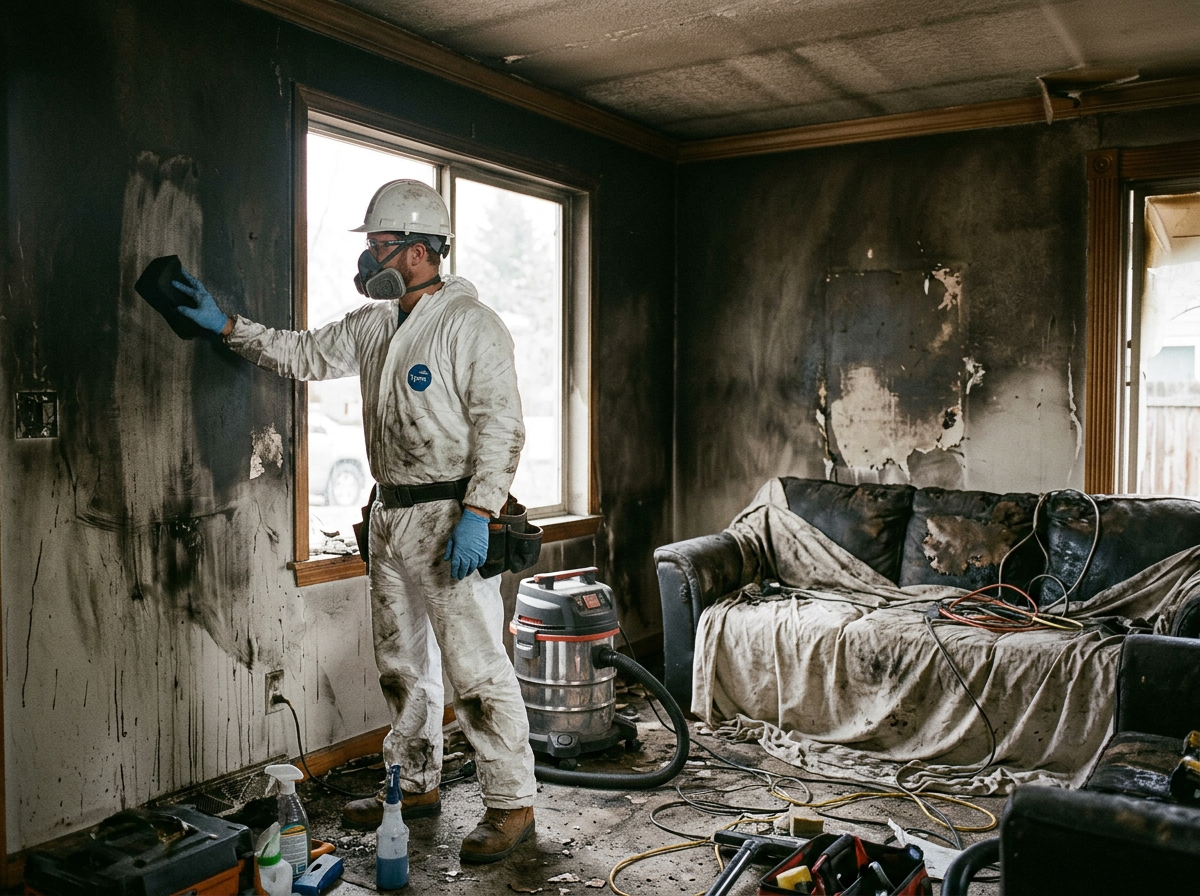
Florissant sits above 8,000 feet in dense ponderosa pine and meadow country where dry lightning and wind can turn a structure fire into a fast-moving interface blaze. Response crews driving from Colorado Springs along Highway 24 often face 45-minute or longer runs, so initial work centers on protecting propane tanks, wellheads and the scattered older cabins that dot larger lots with limited turnaround space.
Smoke travels differently here because of elevation and frequent temperature inversions that trap odors inside log and frame homes. Restoration teams must adapt drying and odor-neutralization steps for thinner air and colder nights while working around narrow private drives that restrict heavy equipment access during both summer fire season and winter snow.
Water supply comes mostly from private wells rather than municipal lines, so any suppression runoff or cleaning process requires careful flushing to avoid sediment or chemical issues in household systems. Crews also coordinate with local Teller County responders who know the back roads that can become impassable after heavy snow or monsoon rain.
Homes in Florissant and Cripple Creek get emergency board-up from the same crews.
Around Florissant
We regularly work near:
- 📍Florissant Fossil Beds National Monument
- 📍Mueller State Park
- 📍Teller County Road 1
- 📍High Park Road
- 📍Florissant Post Office
Fire Damage Restoration in Florissant — Local Notes
- •Dense ponderosa stands and dry grass require repeated ash and ember checks to stop re-ignition after initial knockdown.
- •Steep, narrow driveways on larger lots limit the size of dehumidifiers and air movers that can reach the structure.
- •Older cabins with wood siding and limited ventilation need extended smoke odor treatment because of how cold nights trap residues.
- •Private wells must be flushed and tested after any water used in suppression or cleaning to clear sediment and retardants.