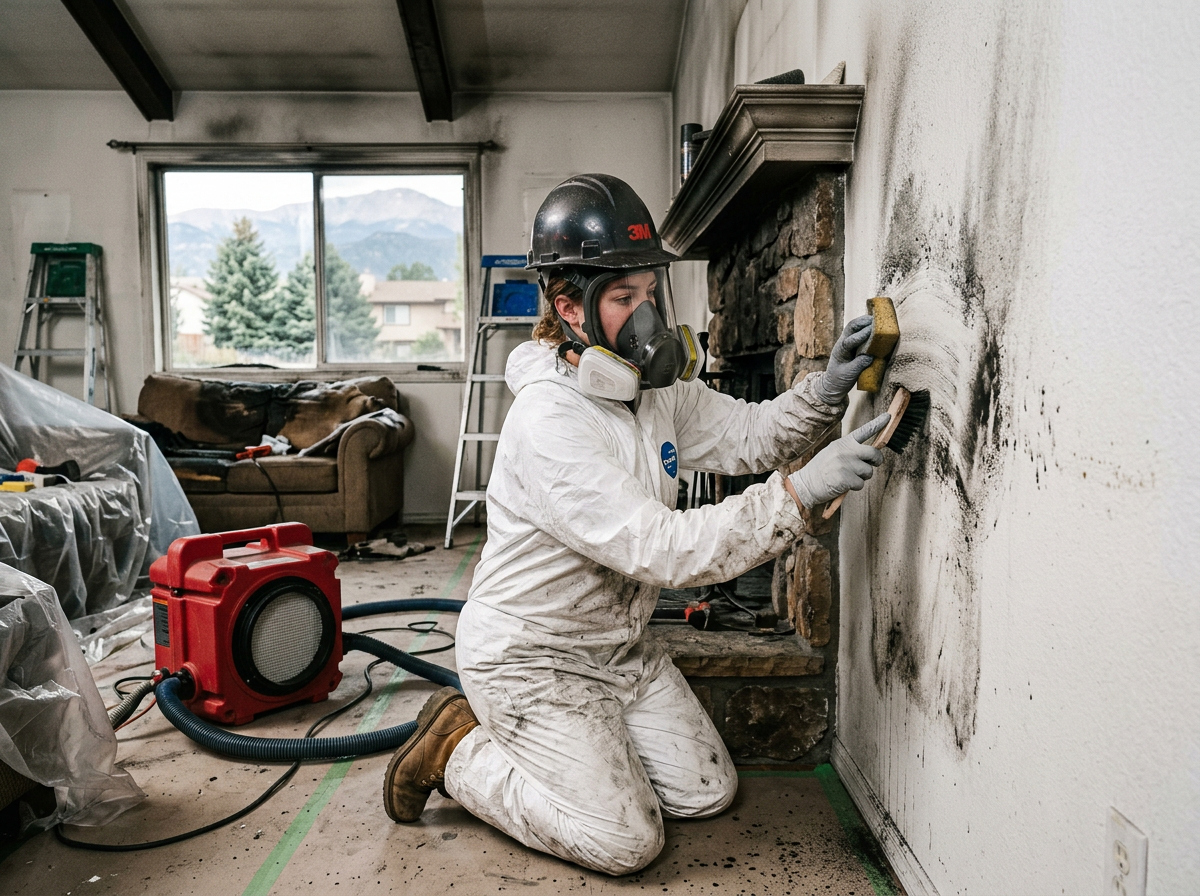
Green Mountain Falls sits in a narrow canyon where ponderosa pine grows right up to older cabin lots and steep driveways. Fire and smoke crews must navigate tight switchbacks on Ute Pass when hauling equipment from Colorado Springs, so arrival times stretch compared with flatter towns. Wood-framed homes from the early and mid-1900s allow smoke to travel through attics and crawl spaces quickly, requiring targeted containment before odors set into logs and paneling.
Private wells supply most properties here instead of municipal hydrants, so technicians bring portable tanks for extraction and drying after a structure fire. Sudden wind shifts through the canyon can push smoke into neighboring homes even on calm days, extending the area that needs inspection. Every project begins with a walk of the steep terrain to map access points and plan how equipment will move without damaging narrow roads or drainage ditches.
Winter snow on the pass and summer afternoon storms both change drying schedules, so crews monitor humidity closely inside each home. The combination of dense vegetation, older construction, and limited road width makes Green Mountain Falls jobs different from work in the plains towns east of the city.
Emergency board-up is also available in Green Mountain Falls, from the same crews that cover Cripple Creek.
Around Green Mountain Falls
We regularly work near:
- 📍Green Mountain Falls Park
- 📍The Falls
- 📍Ute Pass
- 📍Green Mountain
Fire Damage Restoration in Green Mountain Falls — Local Notes
- •Narrow canyon roads off Ute Pass require smaller extraction units and hand-carried tools on many lots.
- •Older log and frame cabins need extra care during soot removal to protect original wood finishes.
- •Well water systems mean crews stage additional tanks before starting any water-based cleaning phase.
- •Canyon winds can carry smoke hundreds of yards, so perimeter checks extend beyond the fire structure itself.