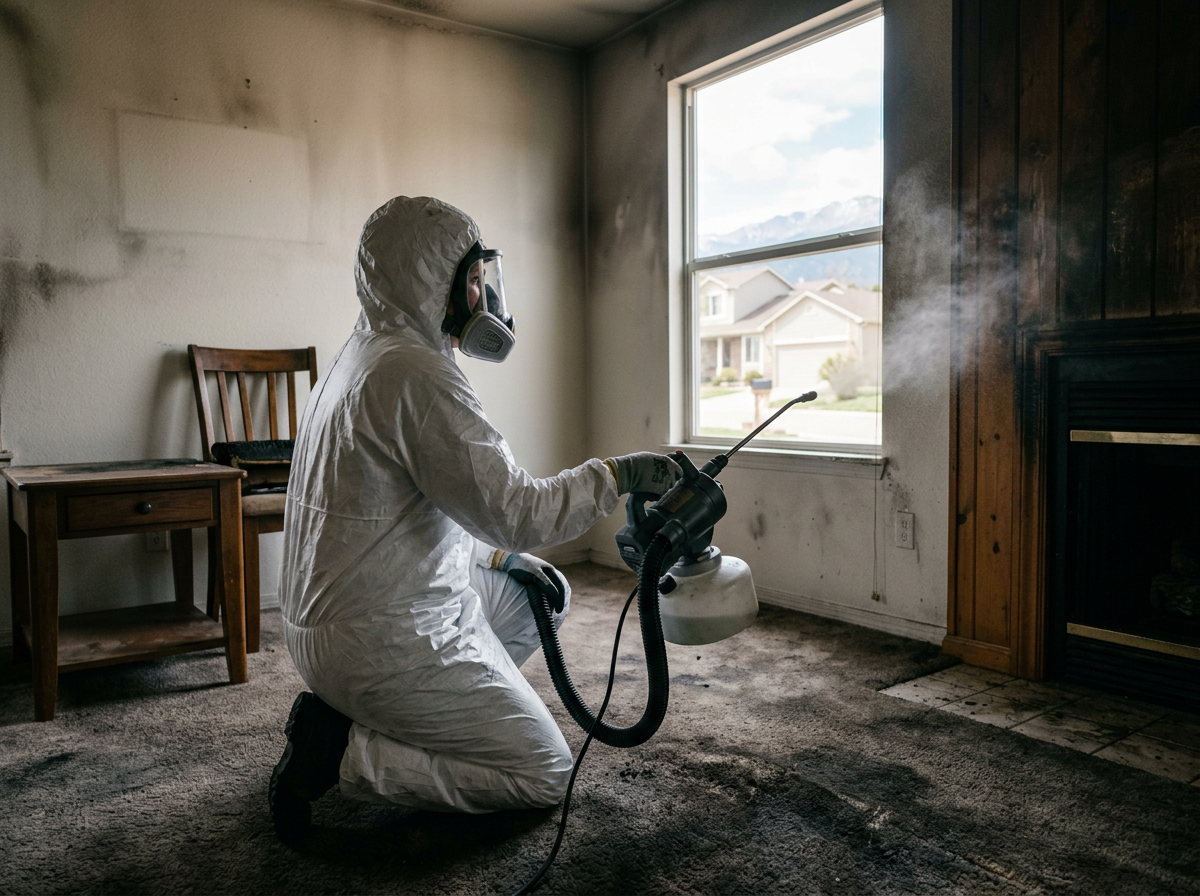
Limon sits on the high eastern plains where grassland fires can race across open lots and reach older ranch homes faster than in foothill towns. Response crews from Colorado Springs face a ninety-minute drive on I-70, so early board-up and soot containment matter more here than in closer suburbs. Propane tanks and private wells are common, which changes how technicians ventilate and clean without municipal water pressure.
Many Limon properties date from the 1950s through 1970s with wood siding and single-pane windows that trap smoke in wall cavities. Large acreage lots mean crews must treat outbuildings, fences and vehicles alongside the main house. Dry summer winds and occasional heavy snow on the divide require equipment staged for both heat and cold starts during multi-day jobs.
Because Limon relies on the Colorado Springs team for advanced drying and odor work, owners get straightforward scheduling and direct owner oversight rather than subcontracted crews. Restoration focuses on removing alkaline soot from prairie fuels that can etch metal and concrete if left untreated.
Around Limon
We regularly work near:
- 📍Limon Heritage Museum
- 📍Limon Railroad Park
- 📍I-70 and US 24 Interchange
- 📍Limon Community Park
- 📍Limon High School
Fire Damage Restoration in Limon — Local Notes
- •Grassland wildfire soot is highly alkaline and requires specialized rinsing on metal roofs and stock tanks common on Limon acreages.
- •Private wells limit water volume during cleaning, so crews prioritize low-flow extraction and HEPA air scrubbing instead of heavy rinsing.
- •Older ranch homes often have propane lines that must be isolated before thermal fogging to avoid re-ignition risks.
- •Long I-70 response windows mean pre-stocked emergency boards and tarps are staged in Limon for same-day arrival.