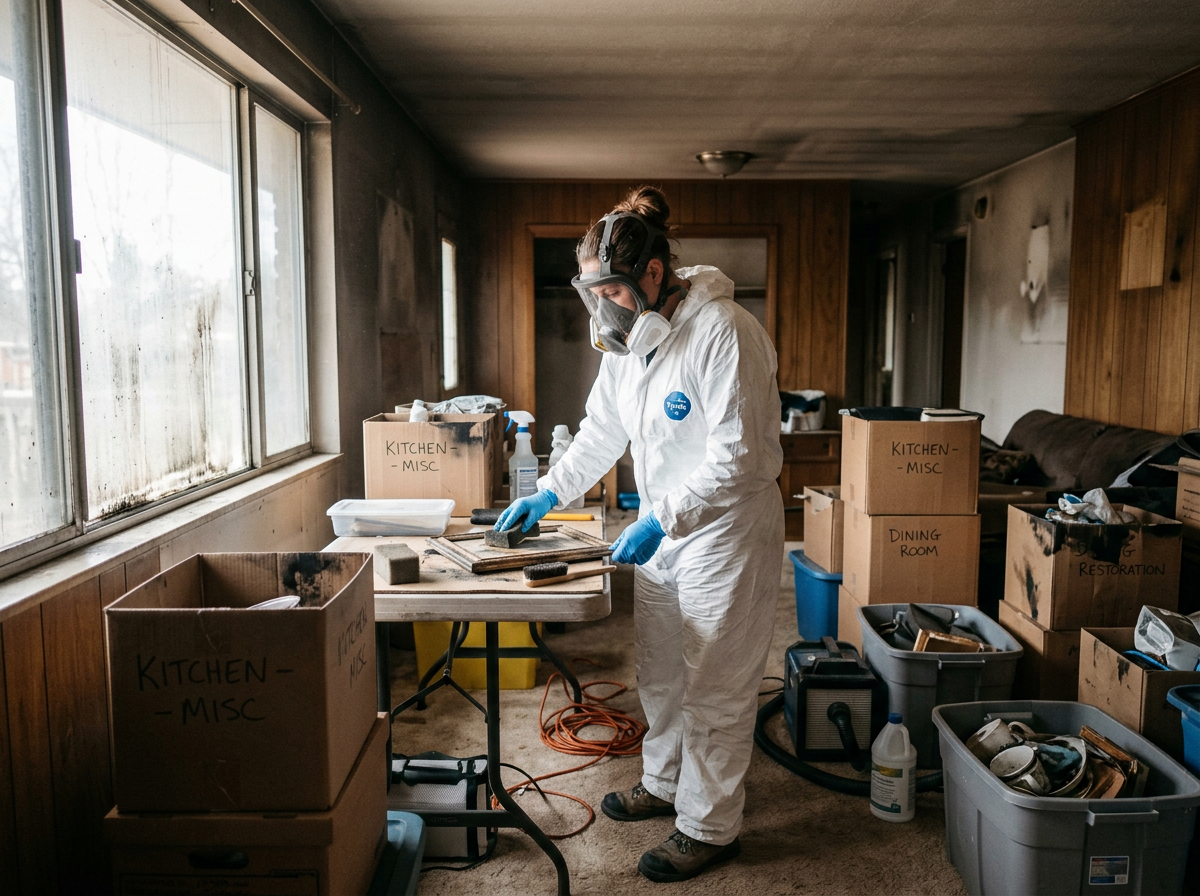
Bennett sits on the high eastern plains with open grassland and scattered trees that turn into fast-moving wildfire fuel when winds pick up. Structure fires here often involve larger lots and outbuildings, so smoke travels farther into homes and lingers in attics and crawl spaces. Crews driving from Colorado Springs face extended response times along I-70 and Highway 36, making early containment and thorough odor removal essential.
Many Bennett properties rely on well water and propane tanks rather than municipal lines, so restoration teams must isolate those systems before cleaning begins to prevent contamination or pressure issues. Older ranch homes and newer builds on large parcels both require careful inspection of ductwork and insulation where smoke particles settle. Owner-operated technicians work around the clock to limit secondary damage from the dry, windy climate.
Access challenges on gravel roads and long driveways mean equipment must be staged efficiently. Local knowledge of Bennett's drainage patterns helps crews protect foundations during water extraction after suppression efforts.
Crews covering Bennett also work in Deer Trail, including smoke damage restoration.
Around Bennett
We regularly work near:
- 📍Bennett High School
- 📍Bennett Park
- 📍I-70 and Highway 36 junction
- 📍Kiowa Creek
- 📍Bennett Town Hall
Fire Damage Restoration in Bennett — Local Notes
- •Large rural lots and grass interface increase wildfire spread and smoke penetration into outbuildings and crawl spaces.
- •Well water and propane tanks require isolation before cleaning to avoid contamination during smoke and soot removal.
- •Extended drive times from Colorado Springs along I-70 mean faster on-site decisions for containment on windy plains days.
- •Gravel roads and long driveways slow equipment staging, so crews pre-plan for Bennett's eastern access routes.