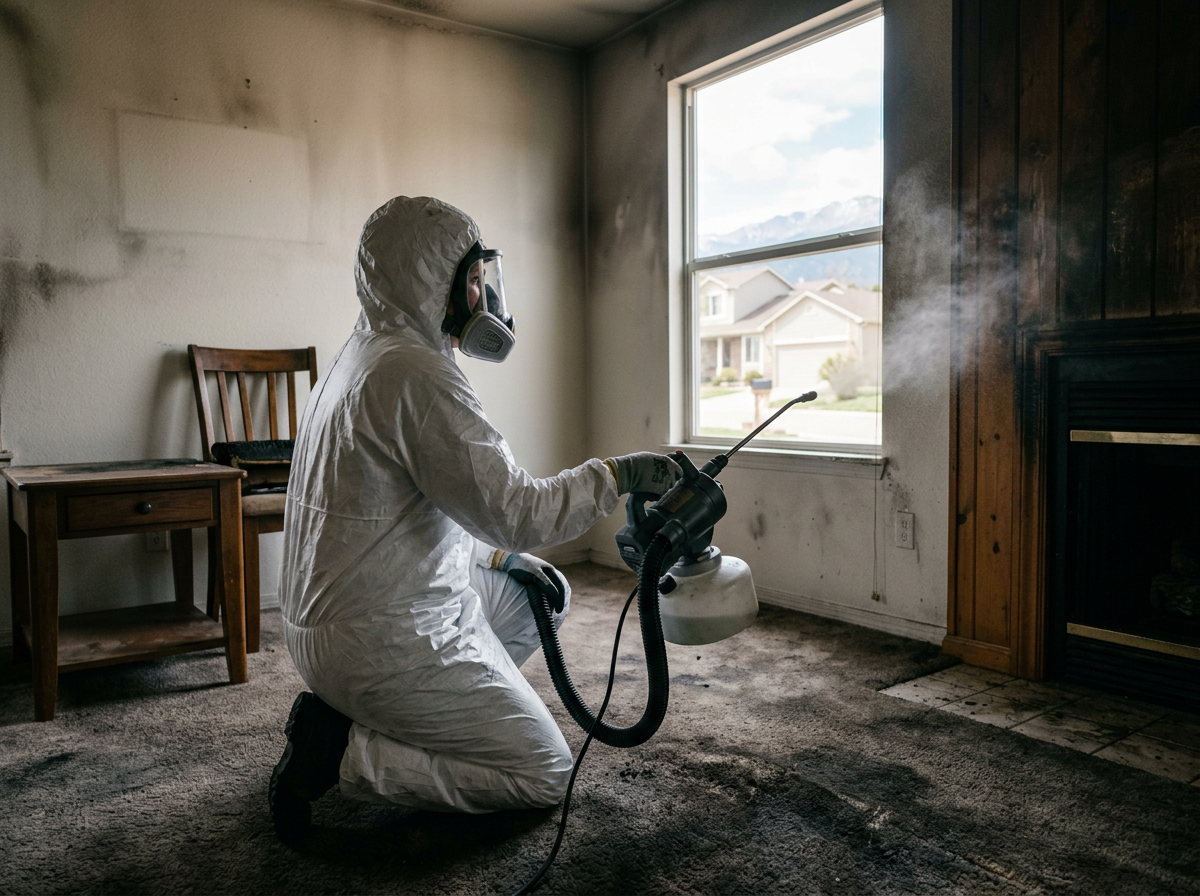
Lone Tree sits along the southern edge of the Denver metro with a mix of newer single-family homes and townhomes built on former ranchland. Properties back up to open space and gulches that carry wind-driven embers during Front Range fire season, so smoke often travels through shared attics and HVAC runs before crews arrive from Colorado Springs. Restoration crews must account for these newer construction details and the longer response window when containing odors in tightly sealed homes.
Access from Colorado Springs runs north on I-25 through Castle Rock, so arrival times stretch during rush-hour backups or winter storms on the Palmer Divide. Local water comes from municipal lines rather than wells, which simplifies some drying work but means crews still manage drainage around the many landscaped retention ponds that dot subdivisions near RidgeGate. Smoke residue on synthetic carpet and engineered flooring common in homes built after 2005 requires different cleaning protocols than older stock farther south.
Emergency board-up and content handling often start at the Park Meadows corridor where commercial buildings sit close to residential streets, creating shared smoke paths that affect multiple owners at once.
The same crews that handle smoke damage restoration in Lone Tree also cover Deer Trail.
Around Lone Tree
We regularly work near:
- 📍Park Meadows Mall
- 📍Cook Creek Park
- 📍Sky Ridge Medical Center
- 📍RidgeGate Parkway
- 📍Lone Tree Recreation Center
Fire Damage Restoration in Lone Tree — Local Notes
- •Newer homes with open floor plans and high ceilings allow smoke to migrate into second-floor lofts and bonus rooms faster than in older ranch layouts.
- •Gulch-side lots near Cook Creek Park funnel wind during red-flag days, pushing embers under decks and into crawl spaces common on sloped Lone Tree parcels.
- •Municipal water supply eliminates well-head concerns but requires careful extraction around community retention basins that can back up during heavy monsoon rains after a fire.
- •I-25 corridor access means equipment staging often happens at the RidgeGate interchange before crews move into individual cul-de-sacs.