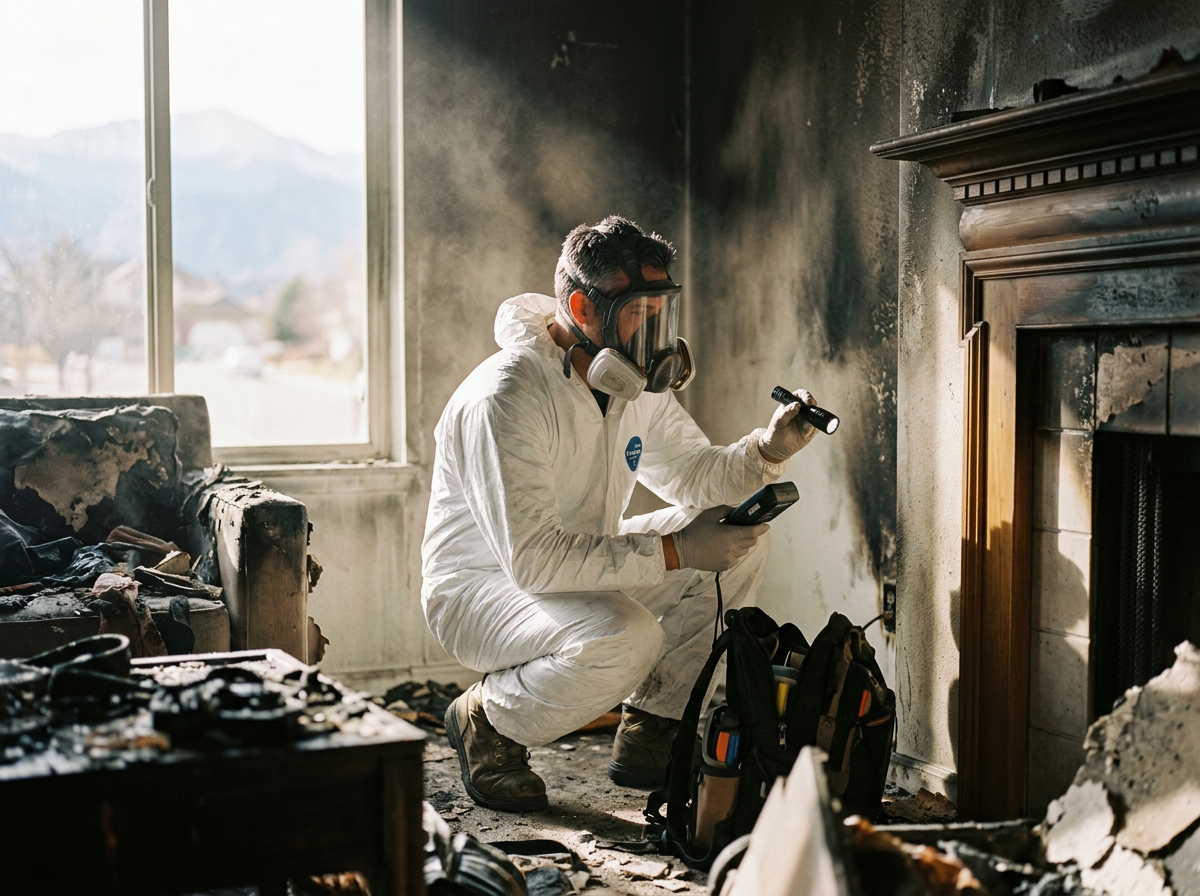
Rush sits on the eastern plains where grass and brush fires move fast across open lots. Crews from Colorado Springs face longer drives on Highway 94, so early smoke and soot control matters more here than in denser towns. Well water and propane systems are common, changing how technicians handle water extraction and tank isolation after a structure fire.
Many homes sit on large parcels with dirt or gravel driveways that can slow heavy equipment arrival. Older farmhouses and manufactured homes often have wood siding and older electrical systems that burn hotter and leave deeper smoke residue in attics and crawl spaces. Restoration teams must plan extra time for equipment staging and debris removal across these spread-out properties.
Winter winds and dry summers increase ember travel risk from distant fires, while summer thunderstorms bring flash flooding that can carry ash into foundations. Local restoration work therefore includes both fire cleanup and post-storm moisture checks tailored to Rush terrain.
The same crews that handle smoke damage restoration in Rush also cover Limon.
Around Rush
We regularly work near:
- 📍Highway 94
- 📍Rush Post Office
- 📍Rush Fire Protection District station
- 📍County Road 105
- 📍Squirrel Creek crossing east of town
Fire Damage Restoration in Rush — Local Notes
- •Propane tanks must be isolated and inspected before any water-based cleaning begins on rural properties.
- •Well systems require separate testing for smoke particulates that can enter pressure tanks and lines.
- •Long gravel drives and gated entrances often delay arrival of large drying equipment from Colorado Springs.
- •Grass and yucca vegetation around foundations increases the chance of hidden ember re-ignition after initial knockdown.