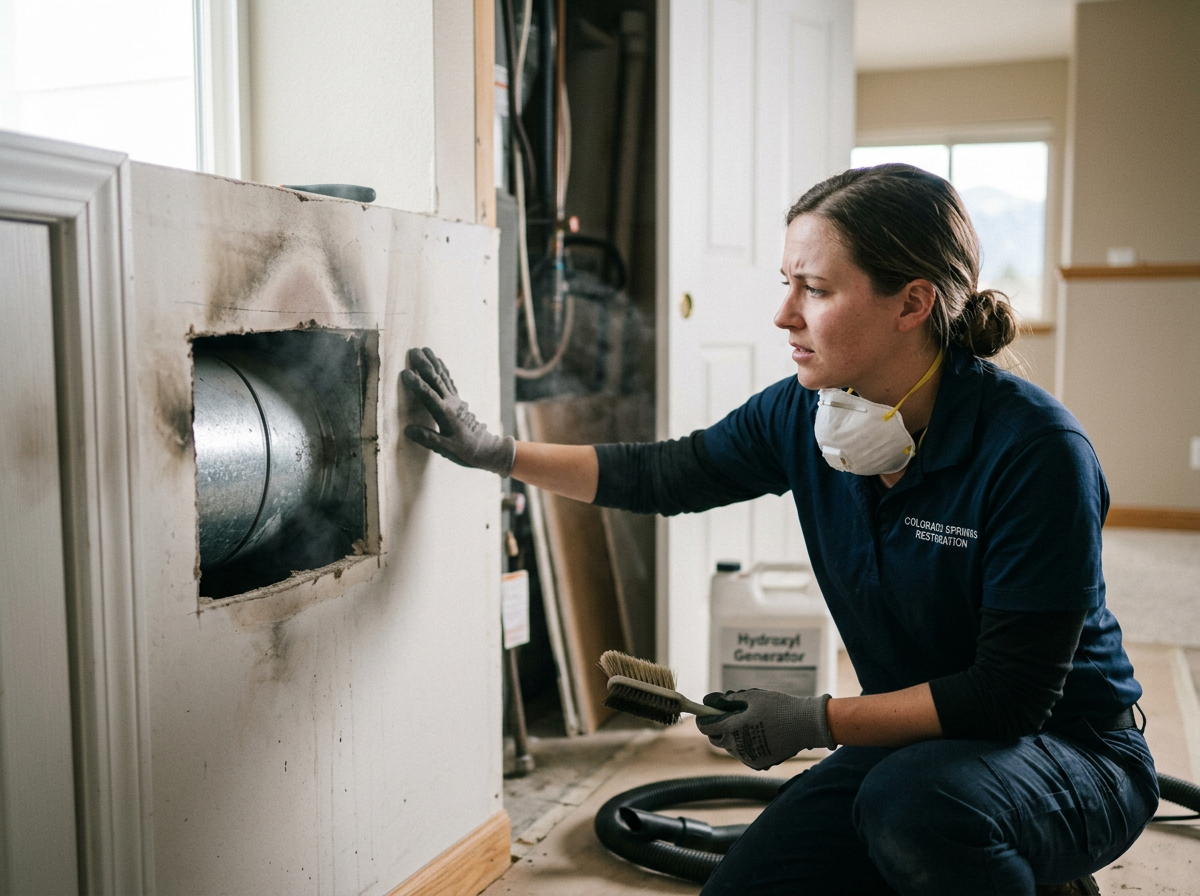
Simla sits on the eastern plains where grass fires move fast across open fields and reach older farmhouses and outbuildings. Response from Colorado Springs means longer drive times, so crews stage equipment and plan for propane tank isolation and well-water protection before work begins. Smoke travels through single-story ranch homes and attached sheds, requiring targeted cleaning that accounts for wind-driven soot patterns common in this area.
Many Simla properties rely on propane and private wells, so restoration crews test for fuel-line damage and water contamination before starting odor removal or structural drying. Rural roads and large lots slow equipment access compared with town streets, and winter wind can push embers into dry vegetation around homes. Technicians adjust containment and negative-air setups to match these conditions rather than using standard urban protocols.
Housing stock ranges from early-1900s farm homes to mid-century ranches, often with wood siding and older electrical systems that complicate hidden smoke damage. Crews inspect crawl spaces and attics for soot that settles during high-wind events, then use drying methods suited to the dry plains climate to prevent secondary mold in thick walls.
The team serving Simla and nearby Limon also handles emergency board-up.
Around Simla
We regularly work near:
- 📍US Highway 24
- 📍Big Sandy High School
- 📍Simla Post Office
- 📍Simla Grain Elevator
- 📍County Road 101
Fire Damage Restoration in Simla — Local Notes
- •Propane tanks on rural lots require isolation and leak checks before any heat or chemical treatment begins.
- •Private wells can pull smoke particulates into water systems, so post-fire testing is standard before occupancy.
- •Long drive times from Colorado Springs mean pre-staging of air scrubbers and drying equipment for faster on-site start.
- •Open fields around homes allow wind-driven soot to enter through gaps in older siding and rooflines.